
Fate plays weird games all the time. The Cooper – Shea project is such a case, which finally came true after almost 42 years! How about that! Both Gary Shea and D.h. Cooper, became notable musicians and made a career on their own but the spark they had since their young day never ceased. They met again after all these years and finally recorded that album which should have been recorded in the early 70s. Gary Shea talked to Grande Rock and revealed some aspects of the Cooper – Shea story that weren’t known till now. Read below for more…
Hi Gary, I’m grateful we’re given the chance to talk about “Partners in Time”… please give us some brief info about the album’s background…
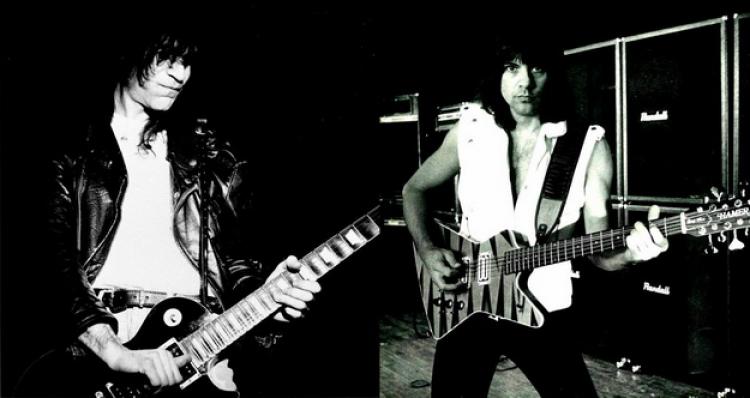
G: In 1973 English vocalist Pete French returned to London after fronting the group Cactus, playing alongside Carmine Appice and Tim Bogert. He joined up with three young musicians, Americans D.h. Cooper on guitar, bassist Gary Shea and German drummer Herman Rarebell.
Our bluesy rock sound caught the attention of The Robert Stigwood Organisation which began funding the group’s rehearsals and their recording sessions at C.B.S. Studios, London. Unfortunately Gary Shea and Herman Rarebell experienced visa problems. Shea returned to The States where he became a founding member of the groups New England and Alcatrazz. Rarebell returned to Germany and joined The Scorpions. D.h. Cooper would go on to session work, while Pete French released solo albums and joined Leaf Hound.
In 2013 D.h. Cooper contacted Gary Shea and they began working on new music together. Pete has contributed a couple of vocal tracks and Herman has added some drumming.
The new CD "Partners in Time" is the result of musicians who have never lost their passion for music and above all, their friendship.
Is it accurate to say that this album has been about 42 years late!!! Better late than ever huh?!!
G: Definitely. Over the years I’ve always wondered what might have ensued had the four of us got the opportunity to continue playing and recording together.
How did you feel when you were recording the tracks for the album? Were there any special feelings about it or what?
G: There were many feelings of satisfaction listening to us play together in the play backs.
Have you Cooper, Peter and Herman been in touch all those years or after 1973 that you followed different ways your roads never crossed until now?
G: We have been in touch on and off over the years. Dh Cooper and Peter worked together a bit and DH played on Herman’s solo album, “Herman The German”. I was going to play on Herman’s record also but my schedule with Alcatrazz prevented that. We always felt we had unfinished business.
Is this album something that you and Cooper mostly had been longing to do? Is it like a promise completed in some way?
G: Yes definitely. We always felt no one had been given the chance to hear our music.
This is a bit hypothetical, but do you think that if you had released the album back in 1973 it would have sounded like the one that you released today?
G: I think the track “High Danger” is indicative of how we sounded originally.
And what would your career have been like if you had finally released the album in 1973?
G: That’s the million dollar question. No one will ever know the answer.
On the other hand, one can say that there’s a reason for everything… and things went the way they went for a certain reason so as to achieve the things you have achieved over the years in your career… what do you believe?
G: Exactly that. All things happen for a reason even if the timing seems to suck at first. We have much more experience now compared to then and hopefully it reflects in better music.
Why did you use vocals only in two tracks? Did you have in mind to make this album fully instrumental or it just came about?
G: Yes, we had started out to just do a few tracks instrumentally and it evolved that Pete sang on two of the songs. We are hoping to do more vocals the next time around.
Does the album title “Partners in Time” refer to your story?
G: Yes, we came up with that to reflect our long history of friendship and our new alliance.
Are all the tracks newly written or did you use some “demos” from the old days too?
G: No, all the tracks were written since then over the years.
Please comment on each track…
G: “Thank You Good Night”: This is very important in that it is the very first song David and I collaborated on. We were very happy at the outcome and it was then that we decided to carry on further with more songs. Very confident instrumental.
“High Danger”: Great vocal from Pete.
“Orange”: One of my favorites. The mid-section goes Godzilla.
“Move It”: Fun to stretch out.
“Don’t Make Angels Cry”: Very medieval and great for film.
“Nickels and Dimes”: This is a great track that features all that we do, from great vocals/lyrics, to individual musicianship. It’s the perfect sample of our sound.
“Hazer Baba”: Heavy...
“Getting Ready”: A good rave up…
“Eastern Light”: Our biggest departure from blues based rock. We have had some amazing comments from all over the world from countries you would least expect.
“Voices”: Cool instrumental with fretless bass.
“The Crossing”: Great guitar work and nice and heavy.
Where did the recordings take place and who is responsible for the production, the mixing and the mastering of the album?
G: The recording was all done from our home studios which Dh and I co-produced going over everything together as a team. Additional production on “Nickels and Dimes” by Pete and his son Domenic.
Did you intend to give that “oldie” 80s-like sound to album or it just happened naturally? You know, these days, many new bands are trying hard to sound kinda “retro” and get a specific 70s/80s sound.
G: Ha, I know there is a huge retro rock thing going on. All I know is that we lived it and I always tell people that’s how we play naturally. We can only hope people like what makes us happy. We didn’t set out to copy the latest flavor of the month on the charts or be part of a trend.
Was it easy to find a music label to release your album, since you’re all are notable musicians, or music labels are not interested in this kind of music these days?
G: We have done it all ourselves, as the music business is ever evolving. The great part about today’s technology is that we don’t need the blessing of others to play our music and get it out to people. We are promoting ourselves and getting some great feedback and compliments.
Phase one was completed. The album is out, after 42 years, and you proved that when there’s love for music anything is possible. What are your expectations from this album?
G: First we have our personal satisfaction and friendship of making this record after we were rudely interrupted by visa problems long ago. We have something concrete now to show what we heard in our heads and hearts, then and now. Hopefully we will have a chance to share it with the public, building our base and continue to keep producing music.
I guess this ain’t a one-album thing… so what are your plans for the future?
G: To enjoy more music with our friends worldwide.There are plans for a follow up CD and we are going to use a song that we did record long ago with some modern updates added.
Time for our “weird questions”!!! Did you go under a name back in the early 70s and what was it?
G: We had discussed the name “Talk”, but never got to use it or anything else.
Since you’re a great bassist, can you explain in a few words how important a bass-player is for a band?
G: The bass player provides the beat of the music, threading its way along the song. It’s what you bounce along to when you listen to music. Many people who are not musically inclined don’t really understand it, but when the bass is taken off the song, in any style, they ask, What went wrong?? Hence my motto “No Bass No Party”…
How much has the music changed since the 70s? Do you feel nostalgic about that time that’s gone and is never coming back again?
G: Never nostalgic, there are always new things to explore. I do however miss the early 70s in that it was a time of great musicianship by real musicians, all of whom sounded unique. Many of todays new bands all sound the same and extremely generic.
Is that whole Rock Star-thing over in our days or what?
G: There will always be new popular artists coming up some of whom will be mega stars.
What would the world be like without religions… can you imagine?
G: In my opinion more peaceful. We are all one people first and music brings us together, not dividing us with man-made rules.
Top 3 horror movies of any era?
G: Solent Green was scary in that it depicted the youth of the future ignorant of history and complacent.
Which is the song you wish you had written and why?
G: “The Girl from Ipanema”, it’s one of the sexiest songs ever with a seductive bass line.
Imagine that your girlfriend/wife/life-partner is selling your whole album-collection just to buy an expensive ring for herself. How would you react?
G: Love would triumph over inanimate objects. My partner need not to do that.
Thx for talking to Grande Rock Gary. Say what you feel like saying before this interview is over. Keep on rockin’ dude… & take care!
G: I would like to thank you, Grande Rock and all the fans, for having us and giving us inspiration for a continued musical adventure. Please take time to like us on Facebook and hopefully you will want to take some of our music home on Amazon, iTunes, etc. Cheers Everyone!! – Cooper-Shea
G: In 1973 English vocalist Pete French returned to London after fronting the group Cactus, playing alongside Carmine Appice and Tim Bogert. He joined up with three young musicians, Americans D.h. Cooper on guitar, bassist Gary Shea and German drummer Herman Rarebell.
Our bluesy rock sound caught the attention of The Robert Stigwood Organisation which began funding the group’s rehearsals and their recording sessions at C.B.S. Studios, London. Unfortunately Gary Shea and Herman Rarebell experienced visa problems. Shea returned to The States where he became a founding member of the groups New England and Alcatrazz. Rarebell returned to Germany and joined The Scorpions. D.h. Cooper would go on to session work, while Pete French released solo albums and joined Leaf Hound.
In 2013 D.h. Cooper contacted Gary Shea and they began working on new music together. Pete has contributed a couple of vocal tracks and Herman has added some drumming.
The new CD "Partners in Time" is the result of musicians who have never lost their passion for music and above all, their friendship.
Is it accurate to say that this album has been about 42 years late!!! Better late than ever huh?!!
G: Definitely. Over the years I’ve always wondered what might have ensued had the four of us got the opportunity to continue playing and recording together.
How did you feel when you were recording the tracks for the album? Were there any special feelings about it or what?
G: There were many feelings of satisfaction listening to us play together in the play backs.
Have you Cooper, Peter and Herman been in touch all those years or after 1973 that you followed different ways your roads never crossed until now?
G: We have been in touch on and off over the years. Dh Cooper and Peter worked together a bit and DH played on Herman’s solo album, “Herman The German”. I was going to play on Herman’s record also but my schedule with Alcatrazz prevented that. We always felt we had unfinished business.
Is this album something that you and Cooper mostly had been longing to do? Is it like a promise completed in some way?
G: Yes definitely. We always felt no one had been given the chance to hear our music.
This is a bit hypothetical, but do you think that if you had released the album back in 1973 it would have sounded like the one that you released today?
G: I think the track “High Danger” is indicative of how we sounded originally.
And what would your career have been like if you had finally released the album in 1973?
G: That’s the million dollar question. No one will ever know the answer.
On the other hand, one can say that there’s a reason for everything… and things went the way they went for a certain reason so as to achieve the things you have achieved over the years in your career… what do you believe?
G: Exactly that. All things happen for a reason even if the timing seems to suck at first. We have much more experience now compared to then and hopefully it reflects in better music.
Why did you use vocals only in two tracks? Did you have in mind to make this album fully instrumental or it just came about?
G: Yes, we had started out to just do a few tracks instrumentally and it evolved that Pete sang on two of the songs. We are hoping to do more vocals the next time around.
Does the album title “Partners in Time” refer to your story?
G: Yes, we came up with that to reflect our long history of friendship and our new alliance.
Are all the tracks newly written or did you use some “demos” from the old days too?
G: No, all the tracks were written since then over the years.
Please comment on each track…
G: “Thank You Good Night”: This is very important in that it is the very first song David and I collaborated on. We were very happy at the outcome and it was then that we decided to carry on further with more songs. Very confident instrumental.
“High Danger”: Great vocal from Pete.
“Orange”: One of my favorites. The mid-section goes Godzilla.
“Move It”: Fun to stretch out.
“Don’t Make Angels Cry”: Very medieval and great for film.
“Nickels and Dimes”: This is a great track that features all that we do, from great vocals/lyrics, to individual musicianship. It’s the perfect sample of our sound.
“Hazer Baba”: Heavy...
“Getting Ready”: A good rave up…
“Eastern Light”: Our biggest departure from blues based rock. We have had some amazing comments from all over the world from countries you would least expect.
“Voices”: Cool instrumental with fretless bass.
“The Crossing”: Great guitar work and nice and heavy.
Where did the recordings take place and who is responsible for the production, the mixing and the mastering of the album?
G: The recording was all done from our home studios which Dh and I co-produced going over everything together as a team. Additional production on “Nickels and Dimes” by Pete and his son Domenic.
Did you intend to give that “oldie” 80s-like sound to album or it just happened naturally? You know, these days, many new bands are trying hard to sound kinda “retro” and get a specific 70s/80s sound.
G: Ha, I know there is a huge retro rock thing going on. All I know is that we lived it and I always tell people that’s how we play naturally. We can only hope people like what makes us happy. We didn’t set out to copy the latest flavor of the month on the charts or be part of a trend.
Was it easy to find a music label to release your album, since you’re all are notable musicians, or music labels are not interested in this kind of music these days?
G: We have done it all ourselves, as the music business is ever evolving. The great part about today’s technology is that we don’t need the blessing of others to play our music and get it out to people. We are promoting ourselves and getting some great feedback and compliments.
Phase one was completed. The album is out, after 42 years, and you proved that when there’s love for music anything is possible. What are your expectations from this album?
G: First we have our personal satisfaction and friendship of making this record after we were rudely interrupted by visa problems long ago. We have something concrete now to show what we heard in our heads and hearts, then and now. Hopefully we will have a chance to share it with the public, building our base and continue to keep producing music.
I guess this ain’t a one-album thing… so what are your plans for the future?
G: To enjoy more music with our friends worldwide.There are plans for a follow up CD and we are going to use a song that we did record long ago with some modern updates added.
Time for our “weird questions”!!! Did you go under a name back in the early 70s and what was it?
G: We had discussed the name “Talk”, but never got to use it or anything else.
Since you’re a great bassist, can you explain in a few words how important a bass-player is for a band?
G: The bass player provides the beat of the music, threading its way along the song. It’s what you bounce along to when you listen to music. Many people who are not musically inclined don’t really understand it, but when the bass is taken off the song, in any style, they ask, What went wrong?? Hence my motto “No Bass No Party”…
How much has the music changed since the 70s? Do you feel nostalgic about that time that’s gone and is never coming back again?
G: Never nostalgic, there are always new things to explore. I do however miss the early 70s in that it was a time of great musicianship by real musicians, all of whom sounded unique. Many of todays new bands all sound the same and extremely generic.
Is that whole Rock Star-thing over in our days or what?
G: There will always be new popular artists coming up some of whom will be mega stars.
What would the world be like without religions… can you imagine?
G: In my opinion more peaceful. We are all one people first and music brings us together, not dividing us with man-made rules.
Top 3 horror movies of any era?
G: Solent Green was scary in that it depicted the youth of the future ignorant of history and complacent.
Which is the song you wish you had written and why?
G: “The Girl from Ipanema”, it’s one of the sexiest songs ever with a seductive bass line.
Imagine that your girlfriend/wife/life-partner is selling your whole album-collection just to buy an expensive ring for herself. How would you react?
G: Love would triumph over inanimate objects. My partner need not to do that.
Thx for talking to Grande Rock Gary. Say what you feel like saying before this interview is over. Keep on rockin’ dude… & take care!
G: I would like to thank you, Grande Rock and all the fans, for having us and giving us inspiration for a continued musical adventure. Please take time to like us on Facebook and hopefully you will want to take some of our music home on Amazon, iTunes, etc. Cheers Everyone!! – Cooper-Shea