
Dewa Budjana is a hard-working guitarist & composer from Bali. Grande Rock has presented Dewa again in the past but now we grasped the chance to talk with him once more due to his new album “Hasta Karma”. Dewa is always full of surprises as the experimental, jazz/avant-prog music of his.
Hi Dewa, it’s nice talking to you after all this time. Congrats on your new album “Hasta Karma”… it’s really magnificent.
D: Thanks, I appreciate the opportunity, the pleasure is all mine. It is an honor to be interviewed by someone from Greece.
First of all, tell us... why do you choose to record each new album with new musicians every time? Does it have to do with the exploration of your musical boundaries or new musicians always renew you as songwriter and music player?
D: On the one side it is a challenge, on the other side it is also an enrichment and some extra experience to play with different musicians all the time. When I compose my music, I always envision different players for my tunes.
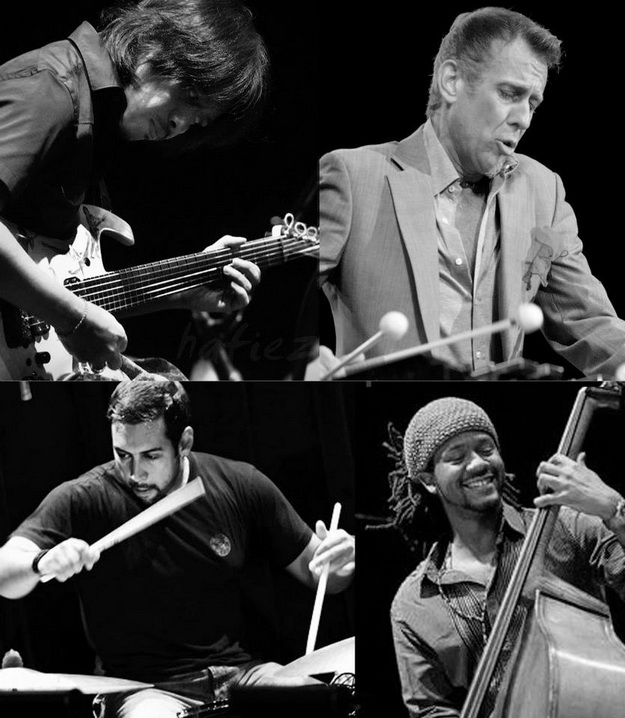
How did the cooperation with the vibraphonist, Joe Locke, the upright bassist Pat Metheny, the drummer, Antonio Sanchez and the keyboardist, Indra Lesmana occur?
D: I have recorded several albums on the West Coast, and Leonardo Pavkovic from my international label MoonJune Records, suggested we come to New York and record with some top musicians from the NYC scene. I always wanted to record with Antonio Sanchez, so Leonardo made a contact, Sanchez suggested Ben WIlliams and Leonardo suggested his old friend Joe Locke. For the post-production I used my longtime friend and colleague Indra Lesmana on the piano and melodica to embellish the tunes.
Do you always plan to work with skillful and well-known musicians? Do they make your life easier during the recording sessions?
D: Yes. Because there is only one session recording, a skillful player is needed. Working with well-known musicians is a part of my dream as I can learn something from them, things like: work ethics, discipline or how to read musical scores and play the part at the same time.
Tell us a few things about the vocalist Jro KtutSidemen… How did you decide to add vocals on “Ruang Dialisis”?
D: That’s my old song taken from my first album “Nusa Damai” (1997). It was my grandmother’s voice, singing a farewell song to her son (my late father) who had been hospitalized in Dialysis Room for 5 years.
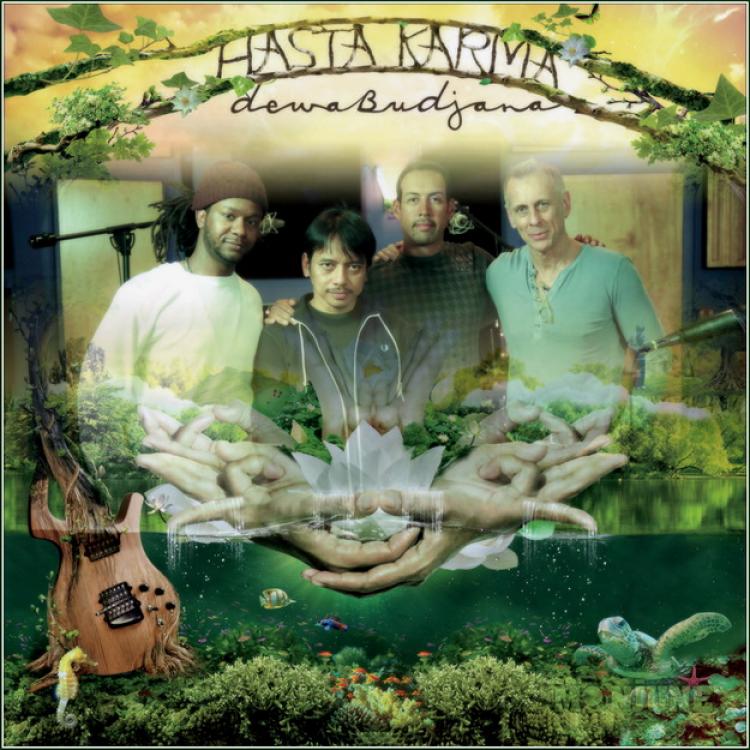
Can you give us a hint about the cover artwork? It’s quite mystique in a way and those “hand symbols” are part of your country’s culture, right?
D: That’s the Lotus symbol, it’s a part of Balinese traditions, similar to the lotus symbol in India.
Do comment on each track…
D: “Saniscara”: It means Saturday in Balinese.
“Desember”: It was composed during the month of December, I was thinking of Bali and New York in December and the next month, in January, I was in NYC recording the album.
“Jayaprana”: It’s a love story between Jayaprana and her lover Layon Sari. However, it’s a happy ending love story, and I have tried to adapt it into my music.
“Ruang Dialisis”: This song is dedicated to my late father, who had been suffering with kidney disease in dialysis room for almost 5 years.
“Just Kidung”: Kidung is a Balinese chant to gods. And it is a little pun in English. In Bali people used to chant in kidung before praying. Yet, Kidung here works as a rhyme for just… kidding.
“Payogan Rain”: This song was inspired by the Payogan area. It was raining when I visited this neighborhood. Payogan is the area where my Guitar Museum is being built.
Your new album was recorded by Randy Crafton, the Kaleidoscope Sounds Studio in Union City, NJ, mixed by Robert Feist at RavensworkStudio, Los Angeles and mastered by Robert Feist & Mark Fuller. You did the final production. Are you satisfied by the final outcome? Do you think that you have found the apt “Dewa sound” over the years?
D: Yes I’m quite satisfied because Robert can understand and give what I want regarding the sound.
I’m wondering… which are those things that inspire you to write music and how do you avoid repeating yourself each time? What’s the secret?
D: Choosing different players every time, that’s what is giving me the inspiration of making a variety of music.
Do you prefer to write and record on the studio or to be on stage? Is it easy to play all those complex tracks live?
D: Both on the studio and on stage. Playing those tunes live is not easy, but when I play them with my band, I always have a keyboardist and another musician on bamboo flute and wordless vocals to give some extra texture.
I remember you told me the previous time that you reduced your ethic elements on the album in order to introduce yourself on the Western world. Has that thing affected your songwriting or you just go where the music takes you now?
D: It has affected the songwriting part. I can’t get rid of those ethnic elements on the album, I believe they are important and they are part of my DNA.
You have also told me that for you artistic creativity is most important. Is that why you’re releasing albums every year? Are you working on a new album as we speak?
D: For me, making a composition is the most important thing for a musician. Then the recording is a means for creativity and releasing every year is a part of creativity too. I recorded a new album this January in Woodstock with Jack DeJohnette (4 tracks on drums and one on piano), Gary Husband (mostly on drums and on the tracks with Jack he played the piano and when Jack played the piano he played the drums) and Tony Levin. There were sessions for two days; we had Jack for one day only on this album which will be a double album and there will be several special guests but, except for the Israeli saxophonist Danny Markovich, we still cannot reveal the other guests as this album will be released in January 2016.
What has changed the last 4-5 years after your opening to the Western world?
D: My friendship with Leonardo of MoonJune became stronger as we are a great team. We have a great mutual chemistry and a great vibe. I also got to know many more musicians, got many new friends, and my last albums were reviewed in over 40 countries worldwide which is a sort of achievement as until 4 years ago I wasn’t known outside of Indonesia. Thanks to MoonJune, my name is getting some buzz, people like what I do, and I am very happy.
Are there any plans for any live show or shows in the near future?
D: I am very busy with my pop-rock band GIGI and with some other businesses, like building my Guitar Museum in Bali, but starting in 2016 I will dedicate more time to the progressive jazz side of my musical career and hopefully I will be able to play in Japan, Europe, South America and the USA.
A few “weird questions” before the end. What’s your opinion about the “free downloading issue” of our time?
D: I don’t like downloading, I prefer to buy physical items. But times change, we have to be flexible with the situation.
Best 3 prog rock albums of all time?
D: “Mr Gone” by Weather Report
“Birds of Fire” by Mahavishnu Orchestra
“American Garage” by Pat Metheny
Were you obliged to give just one album to extraterrestrials that would represent the whole human music, which album would it be and from which band/artist?
D: “Hejira” from Joni Mitchell…
18. Which is the most overrated musician/band of all time?
D: That’s not up to me to say. I would rather say that there are many underrated musicians around the world who need more exposure to be better known.
What kind of music do you prefer the most and what does music mean to you?
D: World music from different parts of the world: India, Arab countries, Brazil, the Mediterranean. Jazz. Music is my life. No music, no life.
Is music part of religion (any religion) or religion is part of music in general?
D: Music is a religion, and music is my religion.
How important is music for the human soul? Is its existence valuable & essential for the human souls?
D: For me, music is very valuable and essential, its existence affects every human soul.
Is music art? Or it used to be? How can those mainstream hit songs we repeatedly hear on the internet, radio & TV be taken as music art?
D: As I see it any kind of music is still art and it’s a part of the current era which is ruled by the internet, radio, TV and so on.
We have finally come to an end. Thx for talking to Grande Rock Dewa. Wish you the best for the future… add anything you like before we close. Thx for the music… take care!
D: My Pleasure. That’s all and thank you for listening to my album.
D: Thanks, I appreciate the opportunity, the pleasure is all mine. It is an honor to be interviewed by someone from Greece.
First of all, tell us... why do you choose to record each new album with new musicians every time? Does it have to do with the exploration of your musical boundaries or new musicians always renew you as songwriter and music player?
D: On the one side it is a challenge, on the other side it is also an enrichment and some extra experience to play with different musicians all the time. When I compose my music, I always envision different players for my tunes.
How did the cooperation with the vibraphonist, Joe Locke, the upright bassist Pat Metheny, the drummer, Antonio Sanchez and the keyboardist, Indra Lesmana occur?
D: I have recorded several albums on the West Coast, and Leonardo Pavkovic from my international label MoonJune Records, suggested we come to New York and record with some top musicians from the NYC scene. I always wanted to record with Antonio Sanchez, so Leonardo made a contact, Sanchez suggested Ben WIlliams and Leonardo suggested his old friend Joe Locke. For the post-production I used my longtime friend and colleague Indra Lesmana on the piano and melodica to embellish the tunes.
Do you always plan to work with skillful and well-known musicians? Do they make your life easier during the recording sessions?
D: Yes. Because there is only one session recording, a skillful player is needed. Working with well-known musicians is a part of my dream as I can learn something from them, things like: work ethics, discipline or how to read musical scores and play the part at the same time.
Tell us a few things about the vocalist Jro KtutSidemen… How did you decide to add vocals on “Ruang Dialisis”?
D: That’s my old song taken from my first album “Nusa Damai” (1997). It was my grandmother’s voice, singing a farewell song to her son (my late father) who had been hospitalized in Dialysis Room for 5 years.
Can you give us a hint about the cover artwork? It’s quite mystique in a way and those “hand symbols” are part of your country’s culture, right?
D: That’s the Lotus symbol, it’s a part of Balinese traditions, similar to the lotus symbol in India.
Do comment on each track…
D: “Saniscara”: It means Saturday in Balinese.
“Desember”: It was composed during the month of December, I was thinking of Bali and New York in December and the next month, in January, I was in NYC recording the album.
“Jayaprana”: It’s a love story between Jayaprana and her lover Layon Sari. However, it’s a happy ending love story, and I have tried to adapt it into my music.
“Ruang Dialisis”: This song is dedicated to my late father, who had been suffering with kidney disease in dialysis room for almost 5 years.
“Just Kidung”: Kidung is a Balinese chant to gods. And it is a little pun in English. In Bali people used to chant in kidung before praying. Yet, Kidung here works as a rhyme for just… kidding.
“Payogan Rain”: This song was inspired by the Payogan area. It was raining when I visited this neighborhood. Payogan is the area where my Guitar Museum is being built.
Your new album was recorded by Randy Crafton, the Kaleidoscope Sounds Studio in Union City, NJ, mixed by Robert Feist at RavensworkStudio, Los Angeles and mastered by Robert Feist & Mark Fuller. You did the final production. Are you satisfied by the final outcome? Do you think that you have found the apt “Dewa sound” over the years?
D: Yes I’m quite satisfied because Robert can understand and give what I want regarding the sound.
I’m wondering… which are those things that inspire you to write music and how do you avoid repeating yourself each time? What’s the secret?
D: Choosing different players every time, that’s what is giving me the inspiration of making a variety of music.
Do you prefer to write and record on the studio or to be on stage? Is it easy to play all those complex tracks live?
D: Both on the studio and on stage. Playing those tunes live is not easy, but when I play them with my band, I always have a keyboardist and another musician on bamboo flute and wordless vocals to give some extra texture.
I remember you told me the previous time that you reduced your ethic elements on the album in order to introduce yourself on the Western world. Has that thing affected your songwriting or you just go where the music takes you now?
D: It has affected the songwriting part. I can’t get rid of those ethnic elements on the album, I believe they are important and they are part of my DNA.
You have also told me that for you artistic creativity is most important. Is that why you’re releasing albums every year? Are you working on a new album as we speak?
D: For me, making a composition is the most important thing for a musician. Then the recording is a means for creativity and releasing every year is a part of creativity too. I recorded a new album this January in Woodstock with Jack DeJohnette (4 tracks on drums and one on piano), Gary Husband (mostly on drums and on the tracks with Jack he played the piano and when Jack played the piano he played the drums) and Tony Levin. There were sessions for two days; we had Jack for one day only on this album which will be a double album and there will be several special guests but, except for the Israeli saxophonist Danny Markovich, we still cannot reveal the other guests as this album will be released in January 2016.
What has changed the last 4-5 years after your opening to the Western world?
D: My friendship with Leonardo of MoonJune became stronger as we are a great team. We have a great mutual chemistry and a great vibe. I also got to know many more musicians, got many new friends, and my last albums were reviewed in over 40 countries worldwide which is a sort of achievement as until 4 years ago I wasn’t known outside of Indonesia. Thanks to MoonJune, my name is getting some buzz, people like what I do, and I am very happy.
Are there any plans for any live show or shows in the near future?
D: I am very busy with my pop-rock band GIGI and with some other businesses, like building my Guitar Museum in Bali, but starting in 2016 I will dedicate more time to the progressive jazz side of my musical career and hopefully I will be able to play in Japan, Europe, South America and the USA.
A few “weird questions” before the end. What’s your opinion about the “free downloading issue” of our time?
D: I don’t like downloading, I prefer to buy physical items. But times change, we have to be flexible with the situation.
Best 3 prog rock albums of all time?
D: “Mr Gone” by Weather Report
“Birds of Fire” by Mahavishnu Orchestra
“American Garage” by Pat Metheny
Were you obliged to give just one album to extraterrestrials that would represent the whole human music, which album would it be and from which band/artist?
D: “Hejira” from Joni Mitchell…
18. Which is the most overrated musician/band of all time?
D: That’s not up to me to say. I would rather say that there are many underrated musicians around the world who need more exposure to be better known.
What kind of music do you prefer the most and what does music mean to you?
D: World music from different parts of the world: India, Arab countries, Brazil, the Mediterranean. Jazz. Music is my life. No music, no life.
Is music part of religion (any religion) or religion is part of music in general?
D: Music is a religion, and music is my religion.
How important is music for the human soul? Is its existence valuable & essential for the human souls?
D: For me, music is very valuable and essential, its existence affects every human soul.
Is music art? Or it used to be? How can those mainstream hit songs we repeatedly hear on the internet, radio & TV be taken as music art?
D: As I see it any kind of music is still art and it’s a part of the current era which is ruled by the internet, radio, TV and so on.
We have finally come to an end. Thx for talking to Grande Rock Dewa. Wish you the best for the future… add anything you like before we close. Thx for the music… take care!
D: My Pleasure. That’s all and thank you for listening to my album.