
Tohpati is a gifted and skillful musician… but apart from all that, he is a music artist with the actual meaning of the word. He lives to create music and practice every day so as to become better. His latest release was truly magnificent so that gave me the chance to contact him and have a small chat about the new album and music in general. Hence, here’s a good opportunity to find out all about Tohpati and discover his music world…
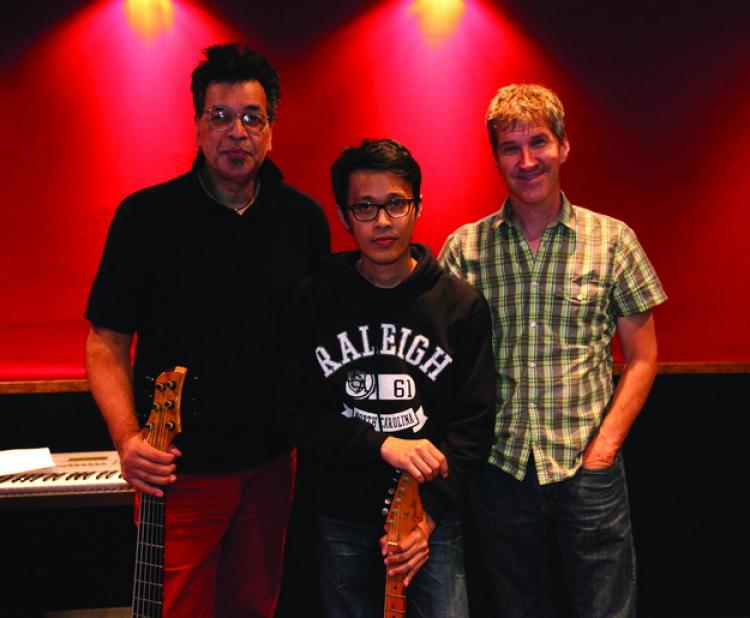
Hi Tohpati! You’re back with a new album almost a year after “Riot” and less than a year after the “The 6th Story” with simakDialog. You seem to be flourishing and in great shape! (Read the “Tribal Dance” review here)
T: Yes, I probably am. And I still have a lot of ideas about the different kinds of music I want to make. But it’s not good to pour these ideas in a short amount of time between one album and the next.
How did your cooperation with Chad Wackerman (Frank Zappa, Steve Vai, Andy Summers, Ed Mann, Dweezil Zappa, Allan Holdsworth, Steven Wilson, etc.) and Jimmy Haslip (Yellowjackets, Blackjack, Allan Holdsworth, Tommy Bolin Band etc.) come about? Whose idea was it to work with two of the most famed musicians in the jazz/fusion genre?
T: The idea for recording with famous American jazz players came from Dewa Budjana. Last year he told me that during the tour with simakDialog in USA, it would be a good time for me to do a recording session. I discussed this with Leonardo Pavkovic, who releases internationally simakDialog and my albums on his MoonJune Records, and he chose Chad and Jimmy. Of course I love both of them because they are amazing musicians who I’ve listened to since I was in high school. And I’d already played with Jimmy when I guested with the Yellowjackets when they played at JakJazz Festival in 2010.
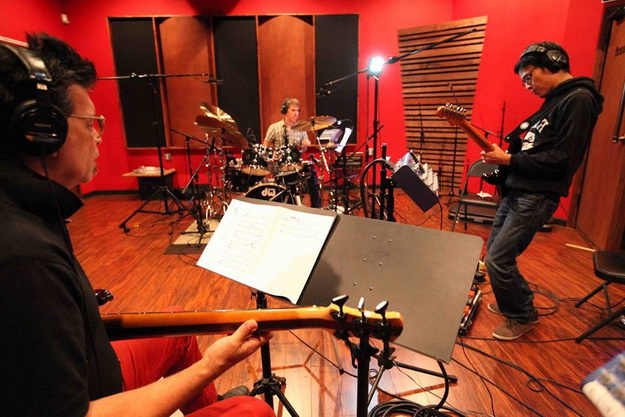
The album was recorded live at EchoBar Studios, North Hollywood by Bob Horn. So how was the experience recording with Chad & Jimmy?
T: Yes, the studio was very nice, good for my music, and Bob Horn was very helpful and a nice guy too. We rehearsed each song few times before we started recording. This took around seven hours, starting at 2 pm and finishing at 9pm. We recorded six songs that day. Chad and Jimmy played great. I’d sent Chad MP3s and the sheet music of the tracks before we met and he came well prepared. Jimmy was very nice and always asked me about how well he’d played. Both are very cooperative.
Did working with such experienced and skillful musicians make your work easier?
T: Absolutely… we didn’t really need to discuss much about the music, so the recording process was efficient.
Is there a certain formula that you follow when you record or jam a track? Could you tell us a few things about it, especially for those who are not aware of the playing and recording process?
T: Of course you have to be prepared with all the songs; don’t play a song that you are not comfortable with, and remember that your technique is very important too.
I read that “Supernatural” was recorded at your own home studio in Jakarta. Why was that? Was that the only track that wasn’t recorded live?
T: No, “Supernatural” was recorded in LA. There are two songs that I recorded in Jakarta after I got back from LA, because I just wanted to add more songs without drums and bass. “Midnight Rain” is one of those, and is the last track on the album.
Do tell us about Pak Kompyang and Iwan Wiradz, the voices on “Rahwana”. How did you come up with this idea for the track?
T: Iwan Wiradz is a musician from Bandung in West Java and Pak Kompyang is a traditional musician from Bali. In Bali, the majority of people are Hindu so the Ramayana, the classic story from India, is often told and performed. “Rahwana” is a character in the tale who is easily angered so the idea for this track was to describe the anger that we all feel.
Why did you name the album “Tribal Dance”?
T: It started when I saw tribal people on YouTube. I was very interested in them because they can live a peaceful life with their culture, and also have a lot of beautiful traditional music. I sometimes think that living in a modern city with its many problems is not better than living in a tribal community.
Please tell us something about each track.
T: “Rahwana”: It’s a character in a Hindu story in Bali.
“Spirit of Java”: I’m Javanese, I use the Javanese pentatonic scale in this song…
“Tribal Dance”: I want to describe the dance tribal people do when they have a traditional ceremony.
“Red Mask”: There is a traditional puppet in Jakarta called Ondel Ondel. The face is usually colored red (for male) and yellow (for female). You can see an image on the front cover.
“Savana”: I was inspired by the view at Mount Bromo, the volcano in East Java.
“Run”: When making this song, I imagined the people from the tribe running around the forest/jungle.
“Supernatural”: In Indonesia, there are many people who have more ability than ordinary humans; we call this ability “the sixth sense”…
“Midnight Rain”: It was raining when I composed this song...
Even though the album does contain a few ethnic features, it is rockin’ as well as being rather atmospheric in places. Can you say that the music is closer to western tastes due to the fan base?
T: I hope so, I am very happy if there are people that listen to my music in the US and Europe.
Indonesia is not only a beautiful place but it has a strong music scene. I think it’s great that MoonJune Records has given all the western music enthusiasts the chance to get to know some very talented musicians such as you...
T: Yes, Indonesia does have a lot of talented musicians, and we thank Leonardo for helping us promote our music outside our country.
How hard is it to make an opening to the Western music world and get recognition from the already celebrated musicians of the music scene? Did you feel any kind of pressure at some point?
T: It is pretty hard, because Jazz originates from US, so to be recognized in US, we as musicians need to have our own original style. And to get that is not easy. Thankfully, I was not pressured, it’s quite the opposite. I was excited and happy to be able to play with western musicians.
How would you define your music style? Do you follow any kind of principles or is it about the mood and the inspiration you have at the certain moment?
T: I don’t know exactly what my music style is. I like Pat Metheny, Scott Henderson, John McLaughin, Wayne Krantz, John Scofield, Jeff Beck, Joe Satriani, Allan Holdsworth. I like jazz but sometimes my ‘rock’ feelings came out. I just write songs according to my mood at that time.
Is Alan Holdsworth one of the most underrated musicians of all time or what?
T: Alan is the one and only... my all time hero, his music is incredible. God gave him an amazing talent that I think no one else can have.
Are you planning to give any live shows in the near future?
T: Hopefully... live shows are important for every musician.
T: Yes, I probably am. And I still have a lot of ideas about the different kinds of music I want to make. But it’s not good to pour these ideas in a short amount of time between one album and the next.
How did your cooperation with Chad Wackerman (Frank Zappa, Steve Vai, Andy Summers, Ed Mann, Dweezil Zappa, Allan Holdsworth, Steven Wilson, etc.) and Jimmy Haslip (Yellowjackets, Blackjack, Allan Holdsworth, Tommy Bolin Band etc.) come about? Whose idea was it to work with two of the most famed musicians in the jazz/fusion genre?
T: The idea for recording with famous American jazz players came from Dewa Budjana. Last year he told me that during the tour with simakDialog in USA, it would be a good time for me to do a recording session. I discussed this with Leonardo Pavkovic, who releases internationally simakDialog and my albums on his MoonJune Records, and he chose Chad and Jimmy. Of course I love both of them because they are amazing musicians who I’ve listened to since I was in high school. And I’d already played with Jimmy when I guested with the Yellowjackets when they played at JakJazz Festival in 2010.
The album was recorded live at EchoBar Studios, North Hollywood by Bob Horn. So how was the experience recording with Chad & Jimmy?
T: Yes, the studio was very nice, good for my music, and Bob Horn was very helpful and a nice guy too. We rehearsed each song few times before we started recording. This took around seven hours, starting at 2 pm and finishing at 9pm. We recorded six songs that day. Chad and Jimmy played great. I’d sent Chad MP3s and the sheet music of the tracks before we met and he came well prepared. Jimmy was very nice and always asked me about how well he’d played. Both are very cooperative.
Did working with such experienced and skillful musicians make your work easier?
T: Absolutely… we didn’t really need to discuss much about the music, so the recording process was efficient.
Is there a certain formula that you follow when you record or jam a track? Could you tell us a few things about it, especially for those who are not aware of the playing and recording process?
T: Of course you have to be prepared with all the songs; don’t play a song that you are not comfortable with, and remember that your technique is very important too.
I read that “Supernatural” was recorded at your own home studio in Jakarta. Why was that? Was that the only track that wasn’t recorded live?
T: No, “Supernatural” was recorded in LA. There are two songs that I recorded in Jakarta after I got back from LA, because I just wanted to add more songs without drums and bass. “Midnight Rain” is one of those, and is the last track on the album.
Do tell us about Pak Kompyang and Iwan Wiradz, the voices on “Rahwana”. How did you come up with this idea for the track?
T: Iwan Wiradz is a musician from Bandung in West Java and Pak Kompyang is a traditional musician from Bali. In Bali, the majority of people are Hindu so the Ramayana, the classic story from India, is often told and performed. “Rahwana” is a character in the tale who is easily angered so the idea for this track was to describe the anger that we all feel.
Why did you name the album “Tribal Dance”?
T: It started when I saw tribal people on YouTube. I was very interested in them because they can live a peaceful life with their culture, and also have a lot of beautiful traditional music. I sometimes think that living in a modern city with its many problems is not better than living in a tribal community.
Please tell us something about each track.
T: “Rahwana”: It’s a character in a Hindu story in Bali.
“Spirit of Java”: I’m Javanese, I use the Javanese pentatonic scale in this song…
“Tribal Dance”: I want to describe the dance tribal people do when they have a traditional ceremony.
“Red Mask”: There is a traditional puppet in Jakarta called Ondel Ondel. The face is usually colored red (for male) and yellow (for female). You can see an image on the front cover.
“Savana”: I was inspired by the view at Mount Bromo, the volcano in East Java.
“Run”: When making this song, I imagined the people from the tribe running around the forest/jungle.
“Supernatural”: In Indonesia, there are many people who have more ability than ordinary humans; we call this ability “the sixth sense”…
“Midnight Rain”: It was raining when I composed this song...
Even though the album does contain a few ethnic features, it is rockin’ as well as being rather atmospheric in places. Can you say that the music is closer to western tastes due to the fan base?
T: I hope so, I am very happy if there are people that listen to my music in the US and Europe.
Indonesia is not only a beautiful place but it has a strong music scene. I think it’s great that MoonJune Records has given all the western music enthusiasts the chance to get to know some very talented musicians such as you...
T: Yes, Indonesia does have a lot of talented musicians, and we thank Leonardo for helping us promote our music outside our country.
How hard is it to make an opening to the Western music world and get recognition from the already celebrated musicians of the music scene? Did you feel any kind of pressure at some point?
T: It is pretty hard, because Jazz originates from US, so to be recognized in US, we as musicians need to have our own original style. And to get that is not easy. Thankfully, I was not pressured, it’s quite the opposite. I was excited and happy to be able to play with western musicians.
How would you define your music style? Do you follow any kind of principles or is it about the mood and the inspiration you have at the certain moment?
T: I don’t know exactly what my music style is. I like Pat Metheny, Scott Henderson, John McLaughin, Wayne Krantz, John Scofield, Jeff Beck, Joe Satriani, Allan Holdsworth. I like jazz but sometimes my ‘rock’ feelings came out. I just write songs according to my mood at that time.
Is Alan Holdsworth one of the most underrated musicians of all time or what?
T: Alan is the one and only... my all time hero, his music is incredible. God gave him an amazing talent that I think no one else can have.
Are you planning to give any live shows in the near future?
T: Hopefully... live shows are important for every musician.
What does the future hold for Tohpati? What will your next music endeavors be?
T: More practice and more creativity.
A few weird questions and we’re done!!! In a world where people can easily download music for free. how do you see things from the inside? And what can we do in order to change things?
T: I don’t really like free download sites. We can’t stop illegal downloading, but maybe governments can. I think it’s fine if a musician gives free downloads of their songs only for promotion purposes, but only for a limited time.
This kind of complex, free-style and thought provoking music isn’t popular and it will probably never be. How do you feel when you see all those untalented people have fame, fortune and recognition instead of others who are worth it?
T: I feel fine; this is normal because every kind of music has its own community, So I’m happy with my music as long as there’s an audience which enjoys my music.
Is music art? How can those mainstream hit songs we repeatedly hear on the internet, radio and TV be taken as art?
T: For me, as long as music is made with passion and hard work, it is an art. Art has different segments and levels.
How important is music for the human soul?
T: I think music is important for the human soul, because we can feel happy or sad. And with music we can share our feelings for other people.
What kind of music do you prefer the most and what does music mean to you?
T: Jazz… this kind of music frees me to be creative.
If you had the chance to be reborn, would you choose to be a musician again?
T: Yes absolutely!! I’m happy to be a musician.
I want to thank you Tohpati for taking the time to do this interview. Thanks for your great music and I hope to catch up with you again soon. Take care!
T: And thank you too. This interview is an honor for me.
T: More practice and more creativity.
A few weird questions and we’re done!!! In a world where people can easily download music for free. how do you see things from the inside? And what can we do in order to change things?
T: I don’t really like free download sites. We can’t stop illegal downloading, but maybe governments can. I think it’s fine if a musician gives free downloads of their songs only for promotion purposes, but only for a limited time.
This kind of complex, free-style and thought provoking music isn’t popular and it will probably never be. How do you feel when you see all those untalented people have fame, fortune and recognition instead of others who are worth it?
T: I feel fine; this is normal because every kind of music has its own community, So I’m happy with my music as long as there’s an audience which enjoys my music.
Is music art? How can those mainstream hit songs we repeatedly hear on the internet, radio and TV be taken as art?
T: For me, as long as music is made with passion and hard work, it is an art. Art has different segments and levels.
How important is music for the human soul?
T: I think music is important for the human soul, because we can feel happy or sad. And with music we can share our feelings for other people.
What kind of music do you prefer the most and what does music mean to you?
T: Jazz… this kind of music frees me to be creative.
If you had the chance to be reborn, would you choose to be a musician again?
T: Yes absolutely!! I’m happy to be a musician.
I want to thank you Tohpati for taking the time to do this interview. Thanks for your great music and I hope to catch up with you again soon. Take care!
T: And thank you too. This interview is an honor for me.